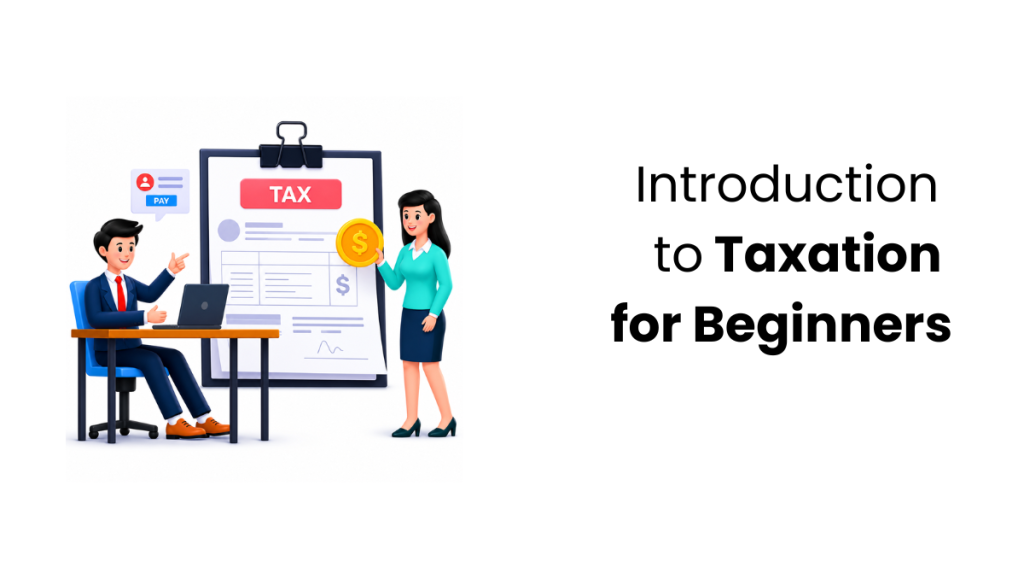
Managing money is an important part of life, whether for individuals, businesses, or governments. One of the most essential financial concepts everyone should understand is taxation. Many people hear terms like income tax, GST, deductions, and tax filing regularly, but they often feel confused about what these terms actually mean. This is why learning Taxation for Beginners is important for students, professionals, and even small business owners who want to understand how the financial system works.
However, taxation is more than just the money that we pay to our governments. Taxation provides the base for the economic growth of any nation. Taxes form the backbone of investments such as roads, hospitals, transport, and other important infrastructures. Proper taxation knowledge can enable an individual to manage his/her money and avoid punishment. Taxation is one of the skills that an individual should have, especially those who want to venture into the accounting field.
What is Taxation?
Taxation refers to the means by which the government acquires revenues from individuals, firms, and corporations for various development activities. This collection of taxes is mandatory, and it takes place in accordance with the set laws and regulations formulated by the government.
For instance, where employees are paid salaries, they end up paying some tax to the government through their income. Additionally, when purchasing goods and services, one may be required to make an indirect payment, such as the GST. Firms also have to pay taxes on any profit made during the financial year.
In other words, taxation is necessary since, without it, the government would find it difficult to provide public services to its citizens.
Taxation for Beginners: Understanding the Basics
Most new learners believe that the subject of taxation pertains only to accountants or businessmen. However, everyone is affected by taxation in one way or another. For example, students buying mobile phones or ordering food from websites incur tax through GST.
Understanding taxation helps individuals:
- Manage finances properly
- Avoid legal issues and penalties
- File tax returns accurately
- Plan investments better
- Understand salary deductions
- Improve financial awareness
Knowledge about taxation for businesses is of even greater significance, as good tax management ensures that the business adheres to all its legal obligations and has proper financial planning.
In today’s world, businesses seek out individuals who possess both accounting and taxation knowledge. This is one reason why there is an increased interest in accounting and taxation education programs.
Types of Taxes
Taxes are generally divided into two main categories: direct taxes and indirect taxes.
Direct Taxes
Direct taxes are taxes paid directly to the government by the person or organization on whom the tax is imposed. These taxes cannot be transferred to another individual.
Income Tax
Income tax is one of the most common direct taxes. It is charged on the income earned by individuals, professionals, and businesses. The amount of tax depends on the income level and applicable tax slabs.
For example:
- Salaried employees pay tax on their salary income
- Freelancers pay tax on professional earnings
- Businesses pay tax on profits
Corporate Tax
Corporate tax is imposed on the profits earned by companies and organizations.
Capital Gains Tax
This tax is charged on profits earned from selling assets like shares, property, or gold.
Indirect Taxes
Indirect taxes are collected by businesses from customers and then paid to the government. These taxes are included in the price of products and services.
Goods and Services Tax (GST)
GST is one of the most important indirect taxes in India. It is charged on the sale of goods and services. Almost every consumer pays GST while purchasing products or services.
Examples include:
- Restaurant bills
- Electronics
- Clothing
- Online subscriptions
Customs Duty
Customs duty is imposed on imported goods entering the country.
Excise Duty
Excise duty is charged on the production or manufacturing of certain goods.
Understanding these tax categories provides a complete Introduction to Taxation because it helps beginners understand how taxes are applied in daily life and business activities.
Basic Taxation Terms Every Beginner Should Know
Before learning advanced taxation concepts, it is important to understand some basic terms commonly used in accounting and taxation.
Taxpayer
A taxpayer is a person or business entity responsible for paying taxes to the government.
Taxable Income
Taxable income refers to the portion of income on which taxes are calculated after deductions and exemptions.
Deductions
Deductions reduce taxable income. Certain investments and expenses qualify for deductions under tax laws.
Exemptions
Exemptions are incomes or transactions excluded from taxation under specific conditions.
Financial Year
A financial year is the accounting period used for calculating taxes. In India, it usually starts on April 1 and ends on March 31.
Assessment Year
The assessment year is the year in which the income earned during the financial year is evaluated and taxed. Learning these terms builds a strong foundation for understanding practical taxation procedures.
How Income Tax Works?
Income tax is calculated based on the total income earned during a financial year. Governments usually divide income into different slabs, and each slab has a specific tax rate.
The process generally involves:
- Calculating total annual income
- Claiming eligible deductions
- Determining taxable income
- Applying tax rates
- Filing tax returns
In many organizations, employers deduct taxes directly from salaries through TDS (Tax Deducted at Source). Self-employed individuals and businesses may need to calculate and pay taxes independently.
Income tax filing has become more digital and simplified in recent years, making it easier for individuals to submit returns online.
Understanding GST and Its Importance
GST has significantly changed the taxation system in India by replacing multiple indirect taxes with a unified tax structure. It has simplified taxation for businesses and improved transparency in the system.
GST is mainly categorized into:
- CGST (Central GST)
- SGST (State GST)
- IGST (Integrated GST)
Businesses registered under GST are required to:
- Issue GST invoices
- Maintain sales and purchase records
- File GST returns regularly
- Pay taxes within deadlines
GST knowledge has become essential for accounting professionals because almost every business deals with GST compliance in some form.
Common Mistakes Beginners Make in Taxation
Most newbies have problems with taxation since they are usually unaware of what needs to be done and what procedures should be followed in order to comply with regulations. These problems may include late filing, income reporting errors, and inadequate record keeping of one’s financial state.
Not understanding tax deductions and exemptions is another common problem people may encounter in their tax life. It is surprising how much money can go down the drain if an individual is unaware of ways to minimize his/her tax payments.
Failing to respond to notices and not updating one’s financial state also causes problems.
Career Opportunities in Taxation
Taxation offers strong career opportunities in accounting, finance, and business management. Every organization requires professionals who can manage taxes accurately and ensure compliance with regulations.
Popular career roles include:
- Tax Consultant
- GST Practitioner
- Accountant
- Accounts Executive
- Tax Analyst
- Financial Consultant
- Audit Assistant
The demand for taxation professionals continues to grow because businesses need experts who can handle tax filings, compliance, audits, and financial reporting efficiently.
Students looking to build practical skills often enroll in an accounting course with certification to improve their career opportunities and gain hands-on accounting knowledge.
Importance of Practical Learning in Taxation
Taxation cannot be mastered through theory alone. Real-world accounting involves practical activities such as GST filing, invoice preparation, tax calculation, TDS management, and return filing.
Practical training helps students understand how taxation works in actual business environments. It also improves confidence and job readiness.
Today, many learners prefer industry-oriented programs and short-term accounting courses in kochi because these programs focus on practical accounting, taxation software, and real-time business applications within a shorter duration.
Employers also value candidates who can perform accounting and taxation tasks practically rather than relying only on theoretical knowledge.
Future Scope of Taxation Careers
The taxation sector continues to experience rapid changes owing to advances in digital accounting technologies, automation, cloud computing, and artificial intelligence financial technologies. Even in the midst of all these changes, taxation professionals are very important since companies need experts who understand tax laws.
Professionals who possess expertise in areas such as GST, income tax, accounting programs, and financial reporting are poised to enjoy a bright future in their careers. Professional development through training and experience will be instrumental in the success of accounting and finance professionals.
How Beginners Can Start Learning Taxation
For beginners, taxation may initially seem difficult because of technical terms and legal procedures. However, learning step by step makes the process much easier.
Beginners can start by:
- Understanding accounting basics
- Learning income tax and GST concepts
- Practicing simple tax calculations
- Studying real business examples
- Learning accounting software
- Taking practical accounting training
Consistent practice and real-world exposure are the best ways to build strong taxation knowledge and confidence.
Conclusion
Taxation is among the most crucial fields of study in both accounting and finance. People from different walks of life use these concepts in their day-to-day activities. Studying taxation will help you to manage your finances effectively and make wise financial decisions.
Studying taxation also gives you some of the best career prospects because all businesses will always need good accountants. Knowledge about concepts such as income tax, GST, and other deductions is very crucial for practical accounting.
Though taxation might seem very difficult, acquiring this kind of knowledge through practice becomes easy. With the proper guidance and adequate training, you will acquire extensive knowledge about taxation and embark on a rewarding career in the accounting and finance sector.
FAQs
1. What is taxation?
Taxation refers to the act by which the government raises funds from its citizenry and companies in order to develop activities.
2. What are the kinds of taxes?
They are either direct or indirect taxes. Income tax belongs to the category of direct taxes,s while GST belongs to the category of indirect taxes.
3. Why is GST so significant?
It makes the taxation system very easy by putting all indirect taxes under one umbrella system.
4. Is taxation complex for newcomers?
No, as long as taxation is understood gradually with the use of some examples.
5. What are some of the skills required in taxation?
Some of them include accounting skills, analytical mind, Microsoft Excel skills, attention to detail,s and tax law.