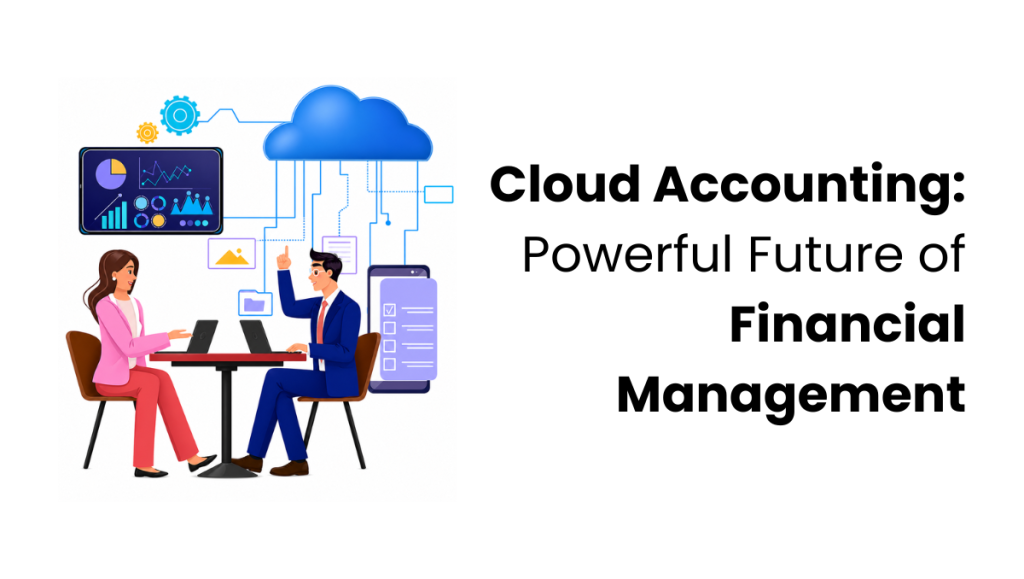
Today, as we move forward with the rapid growth of technology in our world, companies no longer use conventional means to handle their finances. The need for efficiency and precision has led them to seek out better ways. The biggest factor behind these changes is the use of cloud accounting.
For those who have heard the term often and would like to know more about cloud accounting, you’re not alone. It’s becoming an integral part of the way companies handle their finances. In this article, we will delve into the future of cloud accounting and see how it operates.
What is Cloud Accounting?
In order to comprehend cloud accounting, you may consider it as an accounting program that works solely via the Internet. Rather than having to install accounting software on a personal computer, you may use cloud accounting by storing and managing your data online.
You may access your information at any time and from any location, thanks to your Internet connection, whether it be through a laptop, tablet, or mobile phone. You won’t have to worry about being tied to one particular device again since all your invoices, expenses, and other financial information will always be readily accessible to you.
Manual backup and updating are unnecessary in cloud accounting because everything happens automatically.
Why Businesses Are Moving Toward Cloud Accounting
Cloud accounting has become necessary due to the changing requirements of businesses nowadays. Companies today require adaptability, real-time information availability, and effective team collaboration.
Think of a situation where the business person has to analyze financial statements while on the move, while an accountant back at the office is making changes. Such efficiency could not be achieved through the conventional way of doing things.
The fast adoption of cloud accounting is particularly prevalent among startups and small companies. Cloud accounting reduces the costs associated with purchasing equipment and employing IT personnel.
Key Benefits of Cloud Accounting
One of the main reasons behind the rising popularity of cloud-based systems is the wide range of advantages they offer. Understanding the benefits can help businesses make informed decisions.
For starters, cloud accounting gives real-time financial information. What this means is that the business owner will be able to analyze the company’s finances in real-time, without having to wait until the end of the month.
Secondly, there is a lot of accessibility offered by the cloud. As the name suggests, the data can be accessed from anywhere around the world, which has its importance in our digital era.
Thirdly, cloud accounting is quite cost-effective as well. There are no huge investments that businesses have to make in hardware and software installation, as most accounting systems are subscription-based.
There is also security associated with cloud accounting, as modern platforms ensure safety by using encryption and secure backups. In many instances, these systems offer even more security than the conventional method of accounting.
The automation offered by cloud accounting is another key benefit. Invoices, payments, payroll, reconciliations, all of these tasks are now automated and don’t require any manual effort.
Lastly, there is improved collaboration with the cloud. The ability to have multiple people access the same data at the same time improves both efficiency and precision.
How Cloud Accounting is Transforming Financial Management
However, cloud accounting is not only about upgrading technology, but it is also revolutionizing the function of finance itself. Accounting is no longer constrained by record-keeping. It has evolved into a more strategic and analytical activity.
Because of timely access to information, companies will be able to make more accurate and faster decisions and will have the opportunity to identify and respond to emerging issues promptly.
Scalability is another benefit of cloud accounting. Companies that are growing fast need to change their financial processes quite often. However, this is easily managed with cloud computing technology.
Finally, compliance became much easier because of cloud-based services, since many cloud platforms are capable of updating the software accordingly in response to recent legislative changes.
Besides, cloud-based finance is also convenient in terms of working remotely.
Who Can Benefit from Cloud Accounting?
Cloud accounting is suitable for a wide range of users. Small and medium-sized businesses can use it to streamline their financial operations and reduce costs. Startups benefit from its flexibility and scalability, while freelancers and consultants find it useful for managing invoices and expenses.
Even large organizations are adopting cloud accounting to improve efficiency and gain better insights into their financial performance.
For individuals pursuing a career in accounting, learning cloud accounting has become essential. Many students are now enrolling in accounting courses in Bangalore to gain practical knowledge of modern accounting tools. These programs often include hands-on training with cloud-based software.
Additionally, working professionals are opting for Short-term accounting courses to quickly upgrade their skills and stay relevant in a competitive job market.
Popular Cloud Accounting Tools
There are various software platforms that are spearheading the wave of cloud accounting. Some of these include QuickBooks Online, Xero, Zoho Books, FreshBooks, and Wave.
While each of these software has its own unique strengths, the one common thing about all of them is that they provide accessibility and automation of data.
Challenges to Consider
As much as cloud accounting poses several advantages, there are some difficulties that you need to consider.
The first one is the dependence on the internet. Being an internet-based software, it requires a reliable internet connection so as to have access to it without any interruption.
Secondly, there is data security. Despite the high level of security in cloud technology, companies need to select a reputable provider to guarantee that their data is protected.
There could also be a challenge when adapting from conventional accounting software, but this is quite easy to manage.
The Future of Cloud Accounting
Undoubtedly, financial management in the future will be fully automated, and one of the areas that will take center stage in the process is cloud accounting.
Due to breakthroughs in artificial intelligence and machine learning, cloud accounting software has grown increasingly intelligent to the extent that they are able to make predictions, offer recommendations, and analyze data. More automation, integration with other business systems, and advanced data analytics will come in the future. Accounting professionals will become strategic consultants who propel business success.
Conclusion
This new approach to managing company accounts has the potential to transform the field entirely. There is no denying that the flexibility and efficiency it provides are not matched by traditional systems.
With companies increasingly turning to technology in their operations, it becomes essential to understand how to leverage these technologies. For any businessman or even students looking to establish themselves in the field, gaining insight into cloud accounting will go a long way.
FAQs
1. What is cloud accounting?
Cloud accounting is an online accounting system that allows users to manage financial data through the internet instead of using locally installed software
2. Is cloud accounting suitable for small businesses?
Yes, cloud accounting is ideal for small businesses because it is cost-effective, easy to use, and scalable.
3. What are the main benefits of cloud accounting?
The main benefits include real-time data access, automation, improved collaboration, cost savings, and enhanced security.
4. Do I need special training to use cloud accounting?
Basic computer knowledge is enough to get started, but professional training can help you use advanced features more effectively.
5. Can cloud accounting be accessed on mobile devices?
Yes, most cloud accounting platforms offer mobile access, allowing users to manage finances on the go.
6. How can I learn cloud accounting skills?
You can learn cloud accounting through professional training programs, online courses, or certification workshops that offer hands-on experience with modern accounting tools.