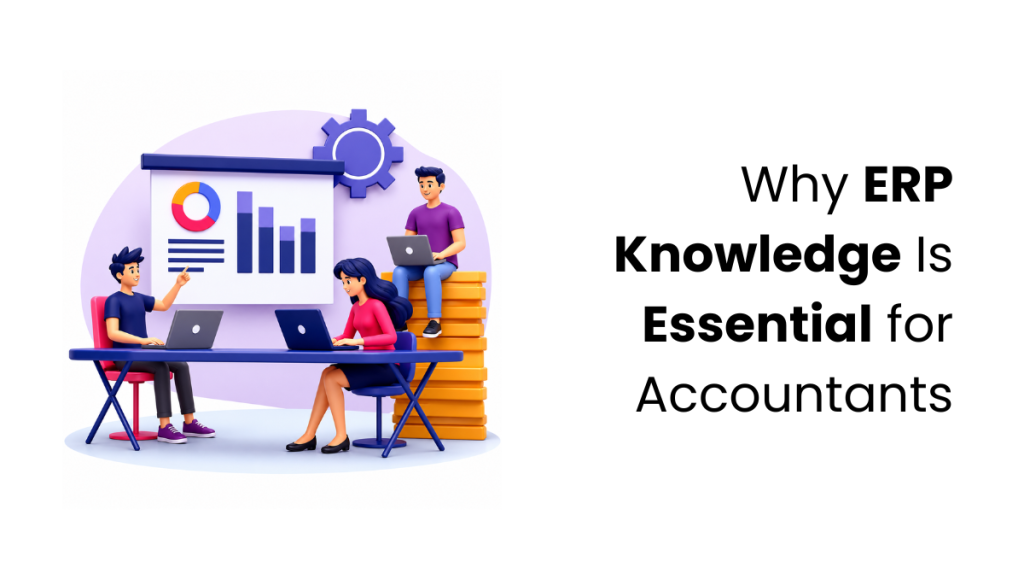
Why ERP Knowledge Is Essential for Accountants
In today’s technology-driven business environment, accounting is no longer limited to maintaining ledgers and preparing financial reports. Modern organisations rely on integrated software systems to manage their financial operations efficiently. Among these systems, Enterprise Resource Planning (ERP) software has become one of the most important tools for businesses of all sizes.
With businesses becoming more digitised, there is much more that accountants need besides accounting skills. Accountants are increasingly being called upon to know ERP software and be able to apply this knowledge to their day-to-day activities. That is why having ERP knowledge is important. It is vital for both novice and seasoned accounting practitioners. If you are an accounting student or an accountant in practice hoping to build up your resume, having knowledge of ERP software will greatly boost your employability.
What Is ERP?
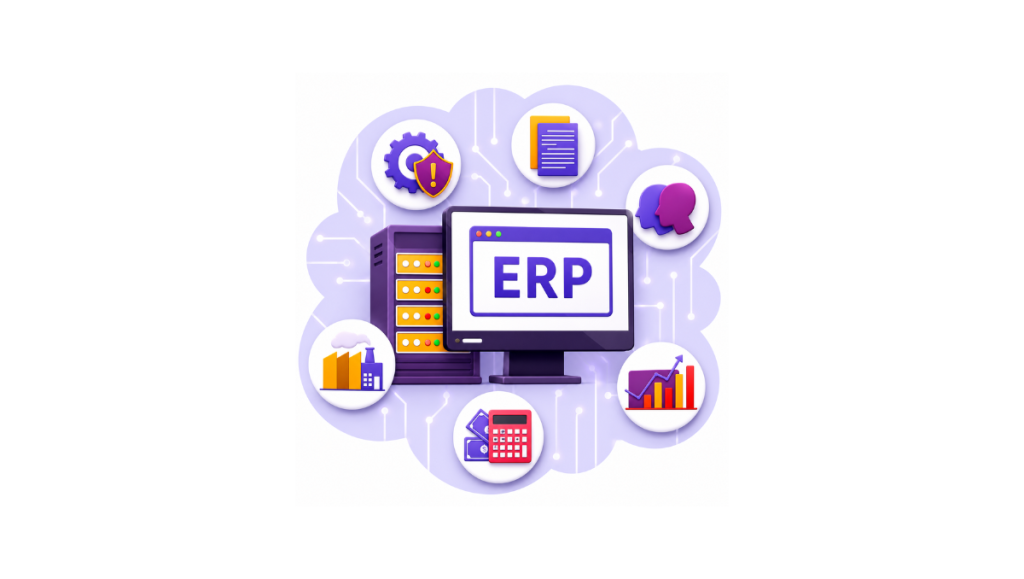
Enterprise Resource Planning is a software application that combines multiple business processes on a single platform. The following are examples of business processes that are included in an ERP software application:
- Finance and Accounting
- Inventory Control
- Human Resources
- Procurement
- Customer Relationship Management
- Manufacturing
ERP software connects various business processes via a central database rather than using individual software applications for each department. The ERP application helps organisations get instant access to information.
The most common ERP applications are SAP, Oracle, Microsoft Dynamics, and Tally Prime ERP solutions. Of all these ERP applications, SAP is one of the most common ERP systems.
The Growing Importance of ERP in Accounting
The role of accountants has changed tremendously over the last decade. Today, businesses require that accountants add value more than just keeping books and meeting regulatory requirements. Today’s accountants are involved in:
- Financial analysis
- Budgeting
- Forecasting
- Cost control
- Decision-making
ERP solutions enable accountants to undertake all these functions effectively. This is why there is a great demand for accountants who are not only skilled in accounting but are also proficient in ERP. Without ERP skills, accountants will be unable to meet the demands of the business environment.
How ERP Systems Improve Accounting Functions?
One of the primary reasons ERP software is widely adopted is its ability to streamline accounting processes.
Real-Time Financial Data
Traditional accounting methods often involve delays in data collection and reporting. ERP systems provide real-time access to financial information.
This allows accountants to:
- Monitor transactions instantly
- Generate reports quickly
- Identify discrepancies early
- Make informed financial decisions
Real-time visibility improves accuracy and helps organisations to respond faster to the changing business conditions.
Reduced Manual Errors
Manual data entry is one of the most common causes of accounting mistakes. ERP software automates many accounting tasks, reducing the risk of human error.
Automated processes include:
- Invoice generation
- Journal entries
- Tax calculations
- Bank reconciliations
By minimising repetitive manual work, accountants can focus on higher-value activities.
Better Financial Reporting
Businesses rely on accurate reports to evaluate performance and plan future strategies.
ERP systems generate comprehensive financial reports, including:
- Profit and Loss Statements
- Balance Sheets
- Cash Flow Statements
- Budget Reports
- Audit Reports
Because all information is stored in a centralised system, reporting becomes faster and more reliable.
Why Employers Prefer Accountants with ERP Skills?
There is great competition in the accounting jobs market. Employers are seeking applicants who will add value to the company without much training.
ERP-trained accountants usually excel due to their ability to:
- Work in complicated accounting systems
- Deal with integrated business processes
- Make businesses efficient
- Help in decision-making for managers
Companies consider ERP-trained accountants to be an asset due to their quick learning and ease of adjustment to current working conditions. These reasons make ERP training an important inclusion in professional development programs.
ERP Knowledge Enhances Career Opportunities
Learning ERP systems can open doors to a wide range of career opportunities.
Professionals with ERP experience can pursue roles such as:
- Accountant
- Senior Accountant
- Finance Executive
- Accounts Payable Specialist
- Accounts Receivable Specialist
- Financial Analyst
- ERP Consultant
- SAP Finance Associate
Many multinational companies specifically mention ERP proficiency as a preferred qualification in their job descriptions.
Having strong ERP knowledge on your resume can significantly increase your chances of securing better job opportunities and higher salaries.
The Connection Between Accounting and ERP
There exists a perception that the ERP system is applicable only in relation to the field of Information Technology. This is not true as accounting forms one of the basic modules used in an ERP system.
All the transactions that take place in the fields of sales, procurement, inventory management, or payroll directly affect the accounting system. For instance, when the business organisation makes a purchase of its inventory, an automatic update takes place in:
The inventory module
- The vendor’s account module
- The general ledger module
- The financial reports module
How ERP Supports Compliance and Auditing?
Regulatory compliance is a critical aspect of accounting. Organisations must maintain accurate records and follow legal requirements related to taxation, reporting, and auditing.
ERP systems help businesses maintain compliance by:
- Recording transactions systematically
- Maintaining audit trails
- Automating tax calculations
- Generating compliance reports
Auditors can easily track financial activities because every transaction is recorded and linked within the system.
This transparency reduces compliance risks and strengthens financial governance.
ERP Skills and Digital Transformation
Digital transformation is changing everything, including the financial and accounting industries. Firms are beginning to focus more on automation, cloud computing, artificial intelligence, and data analysis. ERP technology becomes the basis for all such transformations.
ERP knowledge allows accountants to be ready for working in today’s digital environment. With ERP knowledge, accountants can:
- Analyze data
- Work together with other departments
- Adapt to new technologies
- Help in firm development
In view of digital transformations becoming more rapid, ERP knowledge will always be in demand.
Why Should Accounting Students Learn ERP Early?
Students often focus primarily on theoretical accounting concepts during their education. While a strong academic foundation is important, employers also value practical skills.
Learning ERP during the early stages of a career offers several benefits:
- Improved job readiness
- Better understanding of business processes
- Greater confidence during interviews
- Faster workplace adaptation
Students who combine academic qualifications with practical ERP experience often have a competitive advantage in the job market. This is one reason why many learners are enrolling in ERP training courses to gain hands-on experience before entering the workforce.
SAP ERP: A Valuable Skill for Accountants
Among various ERP platforms, SAP remains one of the most widely used systems worldwide.
SAP Finance modules help organisations manage:
- General Ledger Accounting
- Accounts Payable
- Accounts Receivable
- Asset Accounting
- Financial Reporting
- Cost Management
Since many large enterprises use SAP, professionals with SAP expertise often enjoy excellent career prospects.
Enrolling in SAP training in Bangalore can help aspiring accountants gain practical exposure to real-world financial processes and industry-standard software.
Choosing the Right ERP Training Program
Not all training programs offer equal hands-on experience. While looking for an ERP training program, keep in mind that aspects like:
- Relevant syllabus
- Practical projects
- Certifications might play a role.
- Qualified instructors
- Job placement support
A quality training program should focus on both accounting fundamentals and ERP applications.
Many students are looking for job-oriented courses and choosing ERP-focused accounting programs because they bridge the gap between academic learning and industry requirements.
The Future of Accounting Belongs to Technology-Savvy Professionals
The accounting profession is evolving rapidly. Automation is reducing routine tasks, while businesses increasingly rely on data-driven decision-making. In this environment, professionals who combine strong accounting knowledge with technology skills will have a clear advantage.
ERP systems are not an option anymore, but have become a necessity in today’s business. It is clear that accountants who know about ERP software can be very effective and successful in their careers.
Conclusion
The accounting sector is witnessing a significant change with the help of technology and automation. It is now mandatory for accounting experts to be equipped with practical software skills in addition to their financial knowledge.
ERP tools are vital in making financial tasks easier while offering accuracy in reporting, compliance, and making business decisions. This makes ERP-skilled accountants very popular among all sectors. If you are a student, a fresher, or even an experienced accountant, it will help you immensely in building your career if you spend some time learning ER.
FAQs
1. Why is ERP essential for accountants?
ERP enables accountants to automate the process, reduce errors, report accurately, and have real-time information on finances.
2. What ERP system will be best suited for accounting students?
Some of the popular ERP systems include SAP. ERP systems such as Oracle and Microsoft Dynamics also exist.
3. Can freshers learn ERP?
Yes. Freshers can attend many ERP accounting courses designed especially for them in training institutes.
4. Will learning ERP increase my chances of getting a good job?
Yes. Many employers would like their employees to learn ERP, as it makes them capable of adjusting to modern accounting requirements and contributing right from day one.
5. Should I attend a SAP training course?
Yes. SAP is a commonly used ERP accounting tool that will help in securing jobs in many multinationals.
Why ERP Knowledge Is Essential for Accountants Read More »