

Comprehensive Guide to Financial Transaction Definition and Types
In the accounting and business world, every financial transaction has a story to tell. Whether it is an acquisition of equipment, payment of salaries, or receipt of funds from customers, every event is documented as a financial transaction. Knowledge of financial transactions is the key to correct accounting and bookkeeping.
In this blog, we will provide a comprehensive guide to Financial Transaction Definition and Types, and understand why knowledge of these is important for anyone taking accounting professional courses.
What Is a Financial Transaction?
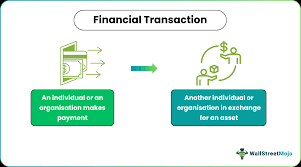
A financial transaction is any business activity that involves the exchange of money or something of monetary value between two parties. It must have a measurable financial effect and should be recorded in the accounting books.
In simple words, if an activity changes the financial position of a business and can be measured in money, it is a financial transaction.
Key Features of a Financial Transaction:
It involves two or more parties.
It has a monetary value.
It affects the financial position of the business.
It is backed by source documents such as invoices, bills, receipts, or vouchers.
Examples:
Purchase of goods for cash
Payment of rent
Receipt of payment from a customer
Taking a loan from a bank
All of the above are financial transactions because they involve money and affect the company’s accounts.
What Are Accounting Transactions?
When we ask about the accounting transactions, we are referring to those business events that are recorded in the books of accounts because they affect assets, liabilities, capital, income, or expenses.
Not every business event is an accounting transaction. For example:
Hiring a new employee is not a transaction until the salary is paid.
Signing a contract is not recorded unless money or value is exchanged.
Accounting transactions follow the double-entry system, meaning every transaction affects at least two accounts, one debited and one credited.
Example:
If a company purchases furniture for 20,000 in cash
Furniture account increases (Debit)
Cash account decreases (Credit)
This dual effect ensures that the accounting equation remains balanced:
Assets = Liabilities + Capital
Understanding this concept is fundamental for anyone enrolled in accounting professional courses or advanced finance training programs.
Types of Accounting Financial Transactions
Financial transactions can be categorized depending on the type of transaction and the mode of payment. Below are the different types of financial transactions explained in brief.
1. Cash Transactions
Cash transactions are those that involve the immediate payment or receipt of cash. The transaction takes place instantly without any delay.
Examples of cash transactions include paying office rent in cash, receiving cash from customers, or buying stationery in cash. These transactions are recorded instantly in the cash book and directly impact the cash balance of the company.
2. Credit Transactions
Credit transactions are those that involve the exchange of goods or services without the immediate payment of cash. The payment is made later.
Examples of credit transactions include selling goods on credit, buying raw materials on credit, or raising an invoice for services provided. These transactions result in Accounts Receivable (amount due to the company) or Accounts Payable (amount due by the company) and need to be handled carefully to ensure proper cash flow.
3. Internal Transactions
Internal transactions occur within the business and do not involve third parties, but they still have an effect on the financial accounts.
Examples of internal transactions include the depreciation of assets, provision for doubtful debts, and year-end adjustments. These are all recorded using journal entries.
4. External Transactions
External transactions occur when third parties are involved, such as customers, suppliers, banks, or government agencies.
Examples of external transactions include borrowing money from a bank, paying taxes, purchasing goods from suppliers, or receiving payments from customers. These are the most common transactions that occur on a daily basis.
Classification Based on the Accounting Equation
Business transactions can also be classified based on the accounting equation as follows:
1. Transactions that Affect Only the Assets
Example: Cash conversion into machinery.
2. Transactions that Affect Both Assets and Liabilities
Example: Purchasing goods on credit increases the inventory (asset) and creditors (liability).
3. Transactions that Affect Both Assets and Capital
Example: Owner investing money into the business increases the cash (asset) and capital.
4. Transactions that Affect Expenses or Income
Example: Payment of salaries increases expenses and decreases cash.

Why Understanding Accounting Transactions Is Important
Learning about financial transactions is not the preserve of accountants alone. It is important for:
- Business owners
- Finance managers
- Students undertaking accounting professional courses
- Entrepreneurs running startups
Here’s why it is important:
1. Accurate Financial Reporting
All financial reports, whether balance sheets or income statements, are composed of financial transactions.
2. Effective Decision Making
All business decisions are based on accurate financial information. Misrepresentation of financial transactions can result in poor financial decision-making.
3. Legal Requirements
Tax computation and filing of financial returns are based on accurate financial transactions.
4. Professional Growth
Understanding the process of recording financial transactions is the first step towards becoming a competent accountant.
Real-Life Example for Better Understanding
Let’s take a small business example:
Owner invests 5,00,000 Rs/-
Purchases furniture worth 50,000Rs/- in cash
Buys goods worth 1,00,00Rs/-0 on credit
Sells goods worth 40,000Rs/- for cash
Each transaction impacts different accounts. Proper recording of these transactions helps in a better understanding of finances.
Students enrolled in organized courses at a Finance Training Institute in Kerala usually perform such real-life examples.
Common Errors in Recording Transactions
Even professionals can make mistakes. Some common errors are:
- Personal expenses recorded as business expenses
- Forgetting to record credit transactions
- Not maintaining proper source documents
- Misclassifying capital and revenue expenses
Practical experience and proper learning through accounting professional courses can help avoid such errors.
How to Learn Financial Transactions Effectively
To learn accounting transactions effectively:
- One should know the accounting equation very well.
- Journal entries should be practiced on a daily basis.
- Real-life examples of business cases should be studied.
- Accounting software should be used to learn.
Most students feel that, instead of learning from textbooks, enrolling in a finance training institute would be beneficial.
The Use of Technology in Recording Transactions
Currently, accounting packages such as Tally, QuickBooks, and ERP software are used to automate the process of recording transactions. But knowledge of the logic involved in transactions is still important.
Software can be used to record transactions, but only an expert can:
- Categorize transactions
- Detect errors
- Analyze financial statements
This is why knowledge from accounting professional courses is still important.
Conclusion
Financial transactions are the backbone of accounting. Knowing what are Accounting transactions are will help you establish a strong base in finance and accounting. Whether it is a cash and credit transaction or an internal accounting adjustment, all of these transactions have a very important role to play in keeping your financial statements accurate.
Learning about the Types of accounting financial transactions will not only help you become better at accounting but will also help you advance your career in finance. Whether you are a student, an entrepreneur, or a working professional, becoming an expert at recording transactions is the first step towards becoming an expert in finance.
If you want to establish a strong career in accounting, you should consider acquiring hands-on training from reputable institutions and accounting professional courses that deal with practical applications.
FAQs
1. What is a financial transaction in accounting?
A financial transaction is any business activity that has a monetary value and impacts the financial position of a company.
2. Why are accounting transactions important?
They are the foundation of financial statements and help businesses monitor income, expenses, assets, and liabilities.
3. What are the primary types of financial transactions?
The primary types of financial transactions include cash transactions, credit transactions, internal transactions, and external transactions.
4. Can a non-monetary event be an accounting transaction?
No, only if it has a monetary value and impacts the financial position of the business.
5. How can I learn accounting transactions effectively?
You can learn accounting transactions through practical training programs, internships, and professional accounting courses.
Comprehensive Guide to Financial Transaction Definition and Types Read More »